
Many homeowners and office managers believe that flipping a standard wall switch to the "OFF" position completely isolates their electronic equipment from severe weather hazards. Unfortunately, this is a dangerous misconception. If the physical power plug remains seated inside the wall socket, your high-value surveillance hardware, network systems, and electronic appliances are still entirely vulnerable to high-voltage destruction during a lightning storm.
As local low-voltage engineering specialists, we frequently see the aftermath of severe monsoon thunderstorms. Safely maintaining your property's electrical health requires looking past surface-level switches. If you want to ensure your overall property infrastructure is set up correctly from the ground up, you can learn more about our full range of services on our Home Page. However, when it comes to your surveillance grid, understanding the hidden vulnerabilities of typical building wiring is critical to preventing costly hardware failure.
🔬 The Technical Truth: Why "Switch Off" Fails
When a severe electrical storm hits, standard single-phase residential or commercial wall switches fail to protect connected hardware due to two major architectural realities in electrical wiring:
1. The Arc Effect (Air Ionization)
A typical domestic wall switch only creates a minute physical gap—roughly 1mm to 2mm—inside its internal mechanism when flipped to the off position. A direct or nearby lightning strike can discharge millions of volts into the local power grid. This extreme electrical potential can easily ionize the air inside the tiny switch gap, creating an intense electrical arc that jumps right across the contact points, traveling straight into your connected device.
2. The Neutral Wire Highway 🔌
Standard building switches are single-pole designs. This means they are engineered to interrupt only the Live (Phase) wire. The Neutral wire remains continuously connected from the main utility grid, through your distribution boards, and directly into the internal circuit boards of your electronic devices.
When lightning causes a massive voltage spike on the grid, the surge travels backward down this uninterrupted Neutral pathway. Because there is no internal switch mechanism to break the Neutral line, it bypasses the "OFF" position entirely, instantly frying the sensitive microprocessors inside CCTV NVRs, PoE switches, and internet routers.
📋 Your Monsoon Safety Checklist
To achieve absolute electrical isolation from both Live and Neutral voltage surges, implement these practices before a thunderstorm reaches its peak:
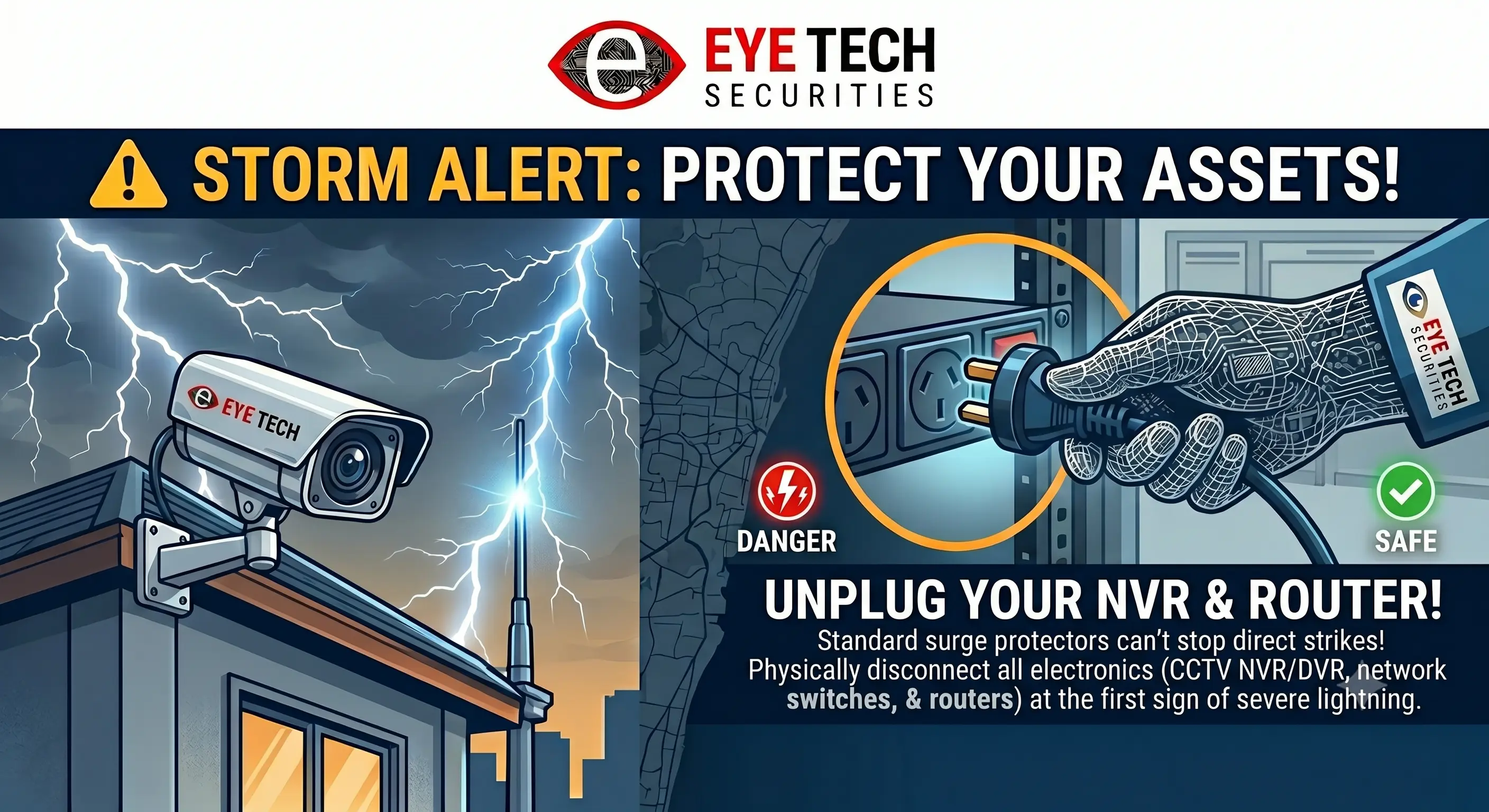
- Physical Disconnection is King: Do not rely on software shutdowns, smart home automations, or standard wall switches. Physically pull the power cords entirely out of the wall outlets. Creating a wide, physical air gap is the only 100% reliable mechanism to isolate sensitive hardware from grid-level spikes.
- Disconnect Data and Network Lines: High-voltage surges do not only travel through power cables. Lightning frequently strikes external telecommunications lines, sending a destructive current down copper data lines. Ensure you disconnect incoming internet LAN/Ethernet cables directly from the back of your primary routers or PoE network switches.
- Implement Correct Disconnection Techniques: When unplugging heavy-duty hardware, always firmly grip the molded plastic plug body. Never pull, yank, or strain the flexible power cord. Pulling the wire compromises the internal copper strands, creating a localized fire hazard when the system is re-energized later.
🛡️ Implementing Permanent, Professional Protection
While manually unplugging devices works during an emergency, it is highly impractical for commercial facilities, server rooms, or large residential setups. True protection requires a professionally engineered system built to handle environmental stressors.
If you are setting up a new property or looking to replace a damaged surveillance system with robust, professionally grounded equipment, exploring a dedicated CCTV Work Package is the best way to ensure your perimeters stay secure without risking hardware burnout.
For automated safety at the electrical panel level, consider these two key upgrades:
- Double-Pole (DP) Switches: Upgrading critical equipment outlets to Double-Pole switches ensures that when you flip the switch to "OFF," both the Live and Neutral lines are severed simultaneously, eliminating the Neutral wire surge pathway completely.
- All-Mode Surge Protective Devices (SPDs): Installing a dedicated Type 2 SPD at your main distribution board ensures that incoming transient overvoltages from lighting strikes are automatically clamped and diverted safely to the earth pit before they ever reach your internal equipment circuits.
🔗 Looking for the Best CCTV Camera Installation Services in Chennai? We provide expert support for all brands.
👉 View our CCTV Camera Packages & Prices